
Young ATP Stars in 2026: Who Can Challenge Sinner and Alcaraz?
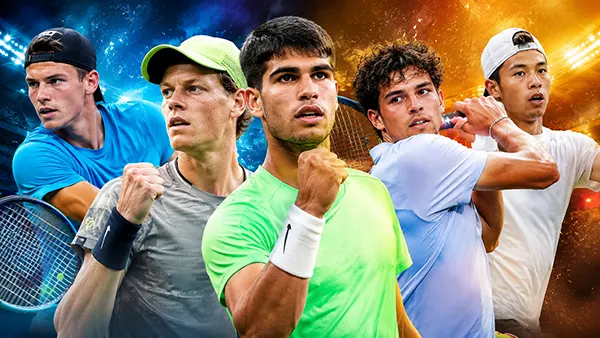
The ATP Tour in 2026 is entering a new phase. Jannik Sinner and Carlos Alcaraz continue to dominate the biggest tournaments, but the gap between the leaders and the next generation is no longer as wide as it looked two years ago. Several young players have improved their physical conditioning, tactical maturity and mental stability, allowing them to compete more consistently against elite opponents on every surface. The season has already shown that the ATP circuit is becoming deeper, faster and far less predictable.
Jakub Mensik and Joao Fonseca Are Leading the Next Generation
Jakub Mensik has developed into one of the most complete young players on tour. The Czech athlete entered 2026 with stronger movement and better point construction, which has helped him compete in long matches against top-10 opponents. His serve remains one of the most dangerous weapons among younger ATP players, especially indoors and on faster hard courts. Analysts have also noted that Mensik now handles pressure situations with far greater calmness than during his breakthrough season.
Brazilian talent Joao Fonseca continues to attract attention because of his aggressive baseline game and fearless shot selection. Unlike many teenagers who struggle with consistency, Fonseca has already demonstrated strong performances in Masters tournaments and ATP 500 events. His forehand generates exceptional pace, while his improved return game allows him to pressure experienced opponents early in rallies. Many coaches believe his physical strength gives him an advantage on slower clay courts as well as medium-paced hard surfaces.
Both players represent a modern version of ATP tennis. They combine powerful serving with aggressive returning and are comfortable changing direction during rallies. This balance is essential in 2026, where points are shorter and tactical hesitation is punished immediately by elite competitors. Mensik and Fonseca are not yet regular Grand Slam contenders, but their progress suggests they could soon become permanent threats to Sinner and Alcaraz during the second week of major tournaments.
How Their Playing Styles Compare with the ATP Leaders
Mensik shares some similarities with Sinner in terms of clean ball striking and controlled aggression. However, the Czech player relies more heavily on first-serve dominance and shorter exchanges. Sinner remains superior in defensive transitions and backhand consistency, particularly during extended rallies. Still, Mensik has already shown that his offensive patterns can disrupt even the most stable baseliners.
Fonseca, meanwhile, is often compared with a younger version of Alcaraz because of his explosive movement and willingness to attack from difficult positions. The comparison is understandable, although Fonseca currently plays with less variety around the net. Alcaraz uses drop shots and sudden tempo changes more effectively, while the Brazilian still depends primarily on baseline power. Even so, Fonseca’s raw athleticism gives him the ability to challenge top opponents on physically demanding courts.
Another important factor is mentality. Sinner and Alcaraz built their dominance through consistency across the entire season rather than isolated tournament runs. Mensik and Fonseca are still learning how to manage expectations, media pressure and demanding travel schedules. The ability to remain competitive during consecutive ATP events often separates talented players from genuine title contenders.
Arthur Fils and Learner Tien Are Becoming More Dangerous
Arthur Fils entered 2026 with considerably more experience at the highest level. The French player has improved his decision-making during key moments and no longer relies only on raw power. His serve-plus-forehand combinations remain central to his strategy, but his defensive positioning has become more disciplined. This tactical growth has helped him perform more effectively against players who previously exploited his impatience.
Learner Tien has emerged as one of the smartest young competitors on tour. The American left-hander does not possess the overwhelming power of some rivals, yet his court awareness and timing compensate for that difference. Tien reads rallies exceptionally well and redirects pace with impressive precision. His ability to absorb pressure from aggressive opponents makes him particularly dangerous on hard courts.
Both players have benefited from modern ATP training systems focused on endurance and recovery. The physical demands of the 2026 calendar are intense, especially with longer rallies becoming common on slower surfaces. Fils and Tien have adapted well to these conditions, allowing them to remain competitive deep into tournaments rather than fading after several demanding matches.
The Importance of Tactical Flexibility in Modern Tennis
The ATP Tour now rewards players who can adjust their game plans during matches. Pure power alone is rarely enough against the top five players in the world. Arthur Fils has started using more variation in rally patterns, mixing flat drives with higher topspin balls to disrupt rhythm. This change has made him more effective against defensive specialists.
Learner Tien represents another important tactical trend: intelligent point construction. Many younger players try to finish rallies too quickly, but Tien often waits for the correct opening before attacking. His patience is unusual for someone at his age and has already earned praise from former ATP professionals working as analysts and commentators.
These tactical adjustments matter because Sinner and Alcaraz have set extremely high standards for adaptability. Both leaders can switch between defence and attack within seconds. Younger players hoping to challenge them must demonstrate similar versatility. Fils and Tien appear increasingly capable of doing exactly that, especially during longer best-of-five matches at Grand Slam level.
The Race for ATP Dominance Is Becoming More Competitive
The 2026 season has confirmed that the ATP Tour is no longer dependent on a single rivalry. While Sinner and Alcaraz remain the benchmark, several younger athletes are steadily reducing the distance. Improvements in sports science, nutrition and tactical preparation have accelerated player development across the tour. Teenagers now arrive on the professional circuit with far greater physical readiness than previous generations.
Another major change is the increasing importance of mental preparation. Young players are working with psychologists and performance specialists earlier in their careers, helping them manage pressure during major tournaments. This support has contributed to more stable performances from rising ATP talents. Instead of producing occasional upsets, many young competitors are now sustaining high-level tennis across multiple events.
The depth of talent also means that rankings can shift quickly. A strong Masters run or Grand Slam semi-final appearance can dramatically change a player’s position in the ATP hierarchy. Fans have already seen several breakthrough performances during the first half of 2026, and the second half of the season is likely to produce even more surprises.
Which Young Player Has the Best Chance of Winning a Grand Slam?
At the moment, Joao Fonseca may possess the highest long-term ceiling because of his athletic ability and aggressive mentality. His game already suits modern hard-court tennis, and further tactical refinement could make him a serious contender at the Australian Open and US Open. The key challenge will be maintaining consistency over two weeks against elite opponents.
Jakub Mensik arguably has the most complete serve among the younger generation. That advantage becomes extremely valuable in Grand Slam events where physical energy must be preserved across several rounds. If his return game continues improving, Mensik could become especially dangerous at Wimbledon and indoor ATP Finals events.
Arthur Fils and Learner Tien should not be underestimated either. Fils has the raw power required to dominate shorter points, while Tien’s tactical intelligence gives him an edge in complicated matches. The ATP landscape in 2026 is far more competitive than many expected, and the next Grand Slam champion from the younger generation may emerge sooner than anticipated.