
Wembanyama’s Playoff Debut: Are Young Stars Ready for Decisive Pressure?
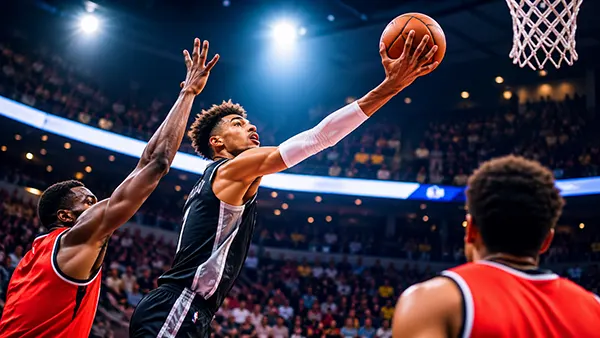
The arrival of Victor Wembanyama in the NBA has already reshaped expectations around what a young player can achieve, but the true test begins in the playoffs. Regular season performances, no matter how dominant, do not fully prepare a player for the intensity, scrutiny, and tactical precision of postseason basketball. As Wembanyama approaches his first playoff experience, the broader question emerges: are modern young stars truly ready for the psychological and physical demands of decisive matches?
The Nature of Playoff Pressure in Modern Basketball
Playoff basketball operates under a different rhythm compared to the regular season. Possessions slow down, defensive schemes tighten, and every mistake is amplified. For young players, this shift can feel abrupt, especially when they have been given creative freedom during the regular campaign. Wembanyama, despite his exceptional skill set, will face opponents who have weeks to prepare specifically for his tendencies.
Another crucial factor is the mental burden. Playoff games often carry a narrative weight, where a single missed shot or defensive lapse can define public perception. Young athletes today are exposed to constant media analysis and social commentary, which intensifies the emotional stakes. This environment tests not only technical ability but also emotional resilience.
Historically, even elite talents such as LeBron James and Kevin Durant required time to adapt to playoff intensity. Their early postseason struggles highlight a pattern: talent alone does not guarantee immediate success. Wembanyama enters this phase with similar expectations, but also with the advantage of learning from past generational players.
How Teams Target Young Talent in the Playoffs
Opposing teams often identify inexperienced players as focal points for strategic pressure. In Wembanyama’s case, this may involve forcing him into uncomfortable positions, such as defending quicker players on the perimeter or dealing with physical contact in the paint. These targeted approaches are designed to disrupt rhythm and test composure.
Coaching staff play a decisive role in this context. Adjustments between games are more frequent and more detailed in the playoffs, meaning that any weakness shown in one match is likely to be exploited in the next. For a young player, this constant adaptation cycle can be mentally exhausting.
At the same time, such targeting can accelerate development. Facing tailored defensive schemes and aggressive tactics forces players to refine decision-making under pressure. If Wembanyama responds effectively, his learning curve could be significantly shortened compared to traditional development paths.
Physical Demands and Tactical Evolution
The physical intensity of playoff basketball often exceeds that of the regular season. Referees tend to allow more contact, which can challenge younger players who are still adapting to the league’s physical standards. Wembanyama’s unique frame and mobility will be closely tested in high-contact scenarios.
Tactically, the playoffs emphasise efficiency over experimentation. Teams rely heavily on proven systems and reduce rotation sizes, meaning that key players log heavier minutes. For a young star, this increase in workload requires both physical endurance and consistent concentration across longer stretches of play.
Additionally, playoff opponents frequently exploit mismatches through repeated actions. Wembanyama’s versatility is an advantage, but it also means he may be involved in a higher number of defensive sequences. Managing energy while maintaining effectiveness becomes a critical skill.
The Role of Experience in High-Stakes Games
Experience often determines how players handle pivotal moments. Veterans tend to recognise patterns within games, anticipate opponent adjustments, and maintain composure when momentum shifts. Young players, even highly talented ones, may react rather than anticipate.
However, modern player development has evolved. Many young athletes enter the NBA with exposure to international competitions, advanced training methods, and early professional experience. Wembanyama, having played in European leagues, already possesses a level of maturity uncommon for his age.
This background could reduce the typical gap between potential and performance. While experience cannot be fully replicated, structured preparation and diverse competitive exposure provide a foundation that previous generations often lacked.
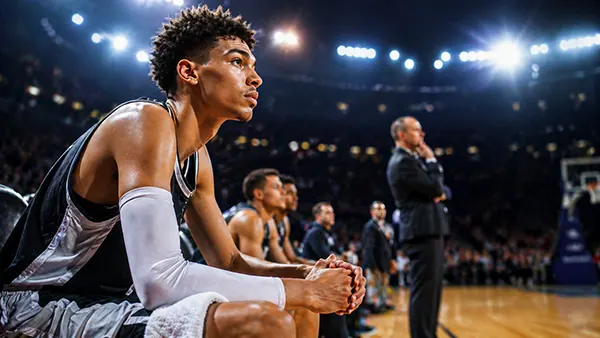
Psychological Readiness and Leadership Expectations
Beyond physical and tactical elements, the psychological dimension is perhaps the most decisive. Playoff success requires the ability to remain composed under sustained pressure, particularly in close games. For Wembanyama, expectations are unusually high, which adds another layer of complexity.
Leadership also becomes more visible in the postseason. Even as a young player, Wembanyama may be expected to influence team dynamics, communicate effectively on defence, and take responsibility in critical moments. This transition from promising talent to central figure can be challenging.
Confidence plays a key role here. Players who trust their preparation and maintain focus on execution rather than outcome tend to perform more consistently. The ability to recover quickly from mistakes is equally important, as playoff games often hinge on brief sequences.
Can Young Stars Redefine Playoff Expectations?
The current generation of players is entering the league with unprecedented preparation, both physically and mentally. This raises the possibility that young stars may begin to succeed earlier in their careers than historically expected. Wembanyama represents a test case for this evolving trend.
At the same time, the fundamental challenges of playoff basketball remain unchanged. Pressure, adaptation, and resilience continue to define success. While preparation methods have improved, the human element of handling high-stakes situations cannot be fully standardised.
Ultimately, Wembanyama’s debut will not only reflect his individual readiness but also signal how the next generation approaches elite competition. Whether he excels immediately or requires time to adjust, his experience will contribute to a broader understanding of how young talent transitions into playoff environments.