First NFL Game in Paris: Why Steelers–Saints Matters for Europe
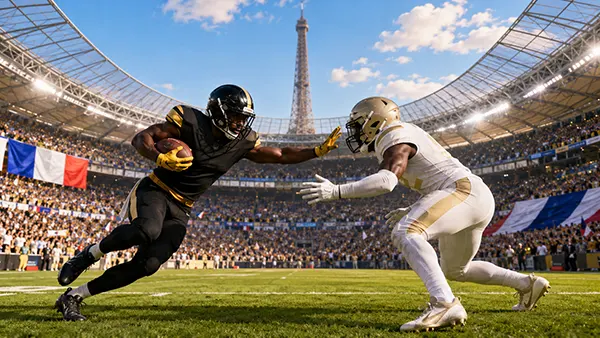
The NFL will stage its first regular-season game in France on 25 October 2026, when the Pittsburgh Steelers face the New Orleans Saints at the Stade de France. The Week 7 fixture is scheduled to begin at 14:30 local time, with New Orleans serving as the designated home team. Its importance reaches well beyond the result on the field. Paris gives the league access to one of Europe’s largest sporting audiences, a proven major-event city and a French fan base that has grown without previously hosting a meaningful NFL game. Steelers–Saints will therefore act as both a landmark occasion and a serious test of how far American football can develop in continental Europe.
Why the First NFL Game in Paris Is a Genuine Milestone
France has hosted American football competitions, local league games and major fan events, but never an NFL regular-season fixture. That distinction matters because this is not an exhibition arranged outside the normal calendar. The Steelers and Saints will compete for a result that affects their 2026 records, conference positions and possible play-off prospects. French spectators will see the same competitive intensity, coaching decisions and physical demands that define a Sunday in the United States. By assigning Paris a meaningful Week 7 contest, the NFL is treating the French market as part of its central sporting product rather than as a side event built only for publicity.
The choice of the Stade de France strengthens that message. Opened in 1998, the national stadium is the largest in the country and can accommodate about 80,000 spectators. It has staged FIFA World Cup matches, major rugby fixtures, UEFA finals and events during the Paris 2024 Olympic and Paralympic Games. This history gives the venue the transport links, security planning and event staff required for a production on the scale of an NFL game. It also places American football in a setting closely associated with France’s most important sporting occasions, giving the fixture a level of status that a smaller venue could not provide.
First events also shape public expectations. A well-organised afternoon with clear information, suitable entertainment and a competitive match can turn occasional viewers into regular followers. A poor event can reinforce the idea that the sport is difficult to understand or mainly designed for American audiences. Paris therefore carries more responsibility than an established host such as London, where fans already know the routines surrounding an NFL weekend. The league must explain the sport without oversimplifying it, preserve the atmosphere familiar to existing supporters and make the day accessible to spectators attending their first American football game.
Why Steelers–Saints Is a Suitable Match for the French Debut
New Orleans is a logical designated home team because the Saints have held NFL international marketing rights in France since 2023. That arrangement has allowed the club to organise local activity, build commercial relationships and communicate directly with French supporters before the Paris fixture was confirmed. The connection also has a cultural dimension: Louisiana’s French heritage remains visible in the identity of New Orleans, giving the Saints a story that French audiences can recognise without it feeling artificially created for one weekend. Paris will be the club’s fourth regular-season game outside the United States after three previous appearances in London.
Pittsburgh brings a different kind of value. The Steelers are one of the NFL’s most recognisable teams and will be playing internationally for a second consecutive season. Their inclusion gives the Paris game an opponent with a long-established identity and a support base that extends beyond Pennsylvania. For spectators who follow the NFL only through highlights, video games or the Super Bowl, a familiar name can make the fixture easier to approach. At the same time, the Steelers are not entering France as the locally assigned club, so the contest avoids feeling like a promotional showcase arranged solely around the Saints.
The sporting contrast should also help new viewers understand what makes the NFL compelling. Both teams carry strong traditions, but the game will be decided by their current 2026 squads rather than reputation. Paris spectators may see changes of possession, field-position battles, short tactical pauses and sudden scoring plays within the same afternoon. Those elements can initially seem unusual to fans raised on association football or rugby, yet they become easier to follow when the score has real seasonal consequences. A close game would be especially valuable, because tension provides the clearest explanation of why each down, penalty and late decision matters.
Paris as a Test of the NFL’s Wider International Strategy
The Paris fixture forms part of the largest international schedule in NFL history. Nine regular-season games are due to be played outside the United States in 2026, spread across four continents, seven countries and eight stadiums. Paris joins Melbourne and Rio de Janeiro as a first-time host, while London, Madrid, Munich and Mexico City also receive games. This scale shows that international expansion is no longer centred on one annual visit to Britain. The league is building a network of host cities with different languages, sporting cultures and levels of familiarity with American football, then comparing how each market responds.
There is now enough history to make those comparisons meaningful. Heading into the 2026 season, 62 NFL regular-season games had been played outside the United States. London supplied the longest-running model, while Germany demonstrated strong demand in Munich and Frankfurt, and Madrid added Spain to the regular-season map. Paris is the next major European test because France combines a large population, global tourism, strong broadcast potential and extensive experience of staging international sport. Success would suggest that the NFL can move beyond markets with decades of regular games and create demand in countries where fandom has developed mainly through television, streaming and local clubs.
The NFL estimates that it already has more than 14 million fans in France, so the Paris game is not an attempt to introduce the league to an empty market. The more important question is how active that audience really is. Some supporters follow a specific team every week, while others watch only the Super Bowl or encounter the sport through social media. Filling the Stade de France would show strong demand for a major occasion, but long-term growth requires more than one sell-out crowd. The league needs to turn broad awareness into regular viewing, team loyalty, merchandise sales, community participation and interest in future French fixtures.
How One Match Can Create Year-Round Interest
A regular-season game gives broadcasters, publishers and local organisations a clear date around which to build coverage. In the weeks before Steelers–Saints, French audiences can be introduced to team histories, leading players, basic rules and the consequences of the Week 7 result. That preparation matters because an NFL broadcast contains terminology and pauses that may confuse a first-time viewer. Good French-language explanation can remove those barriers without reducing the sport to a simple spectacle. After the game, continued coverage of both teams can help retain spectators who formed an attachment during the Paris weekend.
The Saints’ rights in France give the league a club-led route for maintaining that relationship. Team visits, school programmes, supporter events, local partnerships and French-language content can continue after the players return to the United States. The Paris game acts as a powerful centrepiece for those activities, but their value depends on consistency. Supporters are more likely to develop loyalty when they hear from a club throughout the season rather than only when tickets are being sold. Pittsburgh can also benefit from the attention, particularly if its travelling supporters and international activity create a visible presence across the city.
The most useful measures will appear after the final whistle. Attendance will be easy to record, but the league will also examine television audiences, digital engagement, repeat viewing, supporter registrations and participation in local football programmes. French partners will consider whether the event attracted new customers and whether interest lasted beyond the match week. Local organisers will assess transport, security, staffing and the stadium conversion required for American football. Together, those results will help determine whether Paris should become a recurring host, how often France can support a game and which types of team activity produce the strongest response.
What the Paris Game Could Change Across European Football
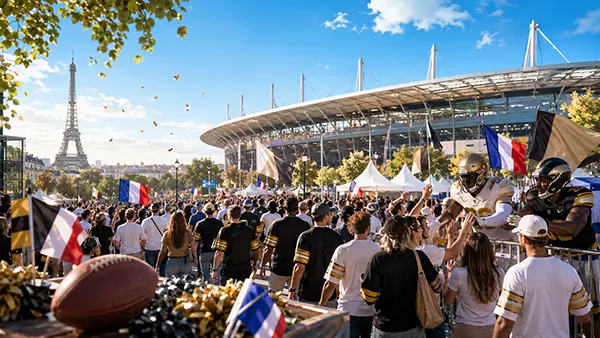
Europe should not be treated as a single NFL market. British fans have nearly two decades of regular-season games, Germany has a large and established American football community, Spain is developing around Madrid, and Ireland has strong historical links with several clubs. France has its own sporting habits, media environment and regional network of teams. The Paris fixture allows the NFL to test a more tailored approach in which local language, national sporting culture and existing community structures shape the event. That method is more sustainable than copying the same plan from one country to another.
The game will also test how easily the NFL can move its full match operation into another major European venue. An American football field, team areas, broadcast positions, medical facilities and supporter services must all be prepared to league standards. The Stade de France has the scale and major-event record to handle those demands, but every new city presents different practical conditions. A successful production would give the NFL and French organisers knowledge that can be reused for later fixtures. It may also encourage other European stadiums and cities to consider whether they can host regular-season games without weakening the quality of the event.
However, one successful afternoon would not automatically lead to a permanent NFL team in Europe, nor would it guarantee an annual game in Paris. A full-time franchise would involve far more complex questions about travel, scheduling, player welfare, competitive fairness and business operations. The more realistic near-term outcome is a stronger rotation of European host cities and deeper club activity between games. Paris can support that direction by showing that a new market is able to attract a large crowd, understand the event, work with local sporting bodies and remain engaged after the initial novelty has passed.
The Lasting Value Beyond 25 October 2026
The strongest long-term link may come through flag football rather than the professional game alone. NFL Flag launched in France in 2023 in partnership with the Fédération Française de Football Américain and had already reached more than 8,000 boys and girls by early 2026. The non-contact format requires less equipment, is easier to introduce in schools and will make its Olympic debut at Los Angeles 2028. A major NFL game in Paris can give young participants visible heroes and show parents, teachers and local authorities that American football includes accessible forms beyond the full-contact version seen on television.
French clubs and coaches can also gain from the attention if investment reaches the grassroots level. Increased demand may bring more participants, volunteers, officials and training opportunities, but growth must be managed carefully. Local organisations need suitable facilities, qualified coaching and clear pathways for girls and boys of different ages. The NFL’s contribution will be most credible when the Paris weekend supports those existing structures instead of overshadowing them. Collaboration with the French federation can connect the international event to competitions and community work already taking place across the country.
Steelers–Saints is therefore important because it links three stages of growth: an existing French audience, a first regular-season game and a developing participation network. The fixture will provide a visible measure of demand, but its deeper value will be judged over the seasons that follow. If French fans continue watching, local programmes expand and clubs maintain a consistent presence, Paris will have shown that European growth can become deeper as well as broader. The first NFL game at the Stade de France is a milestone, but the lasting story will depend on what the league, teams and French sporting community build around it.