La Vuelta 2026: Why the Monaco Start and Early Mountains Could Decide the Race in the First Week
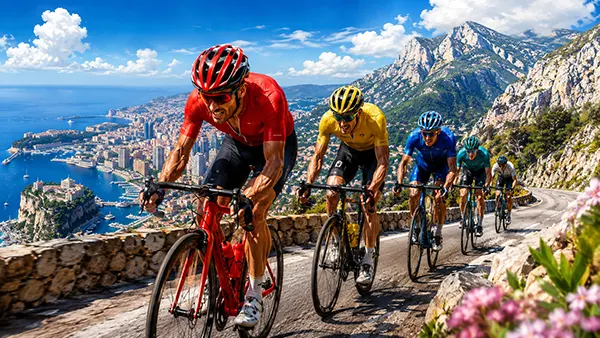
La Vuelta 2026 begins on 22 August with a 9.4 km individual time trial in Monaco, but the opening weekend is only the start of an unusually demanding first nine days. Before the first rest day on 31 August, the race travels through France and Andorra before continuing down Spain’s Mediterranean side, with significant climbing at Font-Romeu, a compact mountain stage in Andorra, the difficult roads around Castelló, a summit finish at Valdelinares and a major mountain stage ending on Alto de Aitana. This concentration of difficult terrain means the general classification may already have a clear shape before the riders receive their first full day of recovery. The winner will certainly need to survive challenges later in the three-week race, yet anyone who loses substantial time during this opening sequence could spend the remaining two weeks trying to repair damage that was done surprisingly early.
Monaco Gives the General Classification Battle an Immediate Shape
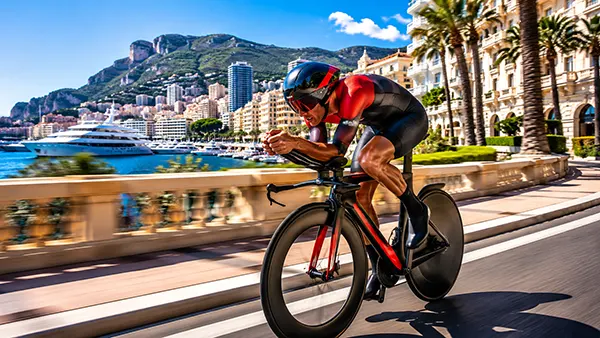
Stage 1 is short, but it is far from a ceremonial beginning. The 9.4 km individual time trial starts in Monaco and uses a compact urban course containing repeated corners, tunnels and changes of direction. Rather than giving the riders several relatively quiet road stages before the first serious test, La Vuelta asks every contender to race alone against the clock immediately. Nine kilometres will not create the gaps normally associated with a long Grand Tour time trial, but even a difference of 15 or 20 seconds matters when it appears before the peloton has completed a single mass-start stage. A strong performance allows a contender to begin the race without pressure, while a poor one creates an immediate deficit. The Monaco course should also reward more than raw power. Positioning the bicycle accurately through corners, maintaining momentum after braking and finding a consistent rhythm on changing roads can all influence the final time.
The following day offers little opportunity to switch off mentally. Stage 2 from Monaco to Manosque measures 214.3 km and is officially classified as hilly. It includes the Category 3 Alto Châteauneuf-Grasse early in the stage and the Category 3 Col de Saint Andrieu later on. Neither climb should produce the same general-classification differences as the major mountains, but the length and constantly changing terrain make the stage important in another way. Riders who started La Vuelta expecting several calm days before the Pyrenees will instead have to manage more than 200 km immediately after the opening time trial. Teams must protect their leaders through crowded roads and changing race situations, while avoiding unnecessary effort. A puncture, crash or poorly timed split on a day that looks relatively modest on paper could become much more costly because genuine mountain stages follow almost immediately.
Stage 3 provides the first sustained climbing test. The 174 km route from Gruissan-Aude to Font-Romeu changes character in its final part as the race heads towards the Pyrenees. The Category 1 Col de Mont-Louis is officially listed at 19.4 km with an average gradient of 4.8%, followed by the final climb to Font-Romeu, which covers 9.8 km at an average of 5%. The finish stands at roughly 1,936 metres above sea level. Those figures are not extreme by La Vuelta standards, but their position in the race is crucial. The peloton reaches a lengthy mountain ascent on only the third day, followed by another uphill effort to the finish. It should quickly show which leading riders have arrived with strong climbing form and which are hoping to improve as the race progresses.
Why the Short Opening Time Trial Matters More Than Its Distance Suggests
A 9.4 km time trial cannot settle a three-week Grand Tour on its own, and it would be misleading to treat Monaco as the decisive stage. Its real importance comes from what follows. In a more traditional route, a climber who gives away several seconds in an opening time trial may have days to remain patient before looking for opportunities in the mountains. La Vuelta 2026 removes much of that waiting period. Font-Romeu arrives on Stage 3 and Andorra on Stage 4. A contender who leaves Monaco behind the strongest rivals therefore knows that the first realistic opportunity to respond is almost immediate. That can change how a team approaches the opening days, because protecting position is no longer enough for everyone. Some riders may already need to look for moments when they can recover time rather than simply avoiding losses.
The Monaco stage can also establish the first hierarchy among riders who enter the race with similar ambitions. Small differences often affect decision-making. A rider who starts the road stages 20 or 30 seconds ahead of another contender has no reason to take the same risks as the rider who is behind. The leader can follow attacks and preserve energy, while the trailing rider may feel pressure to create separation. This does not mean every early move will be motivated by the opening time trial, but the clock begins influencing tactics from the first evening. Because La Vuelta moves rapidly into climbing terrain, those small initial gaps are more relevant than they would be if a week of flat stages separated the time trial from the first mountains.
There is also a simple practical issue: the opening stages give riders very little time to correct a poor start. Grand Tours are sometimes described as races in which form can improve gradually over three weeks. That remains true, but the 2026 route puts a high value on arriving ready. A rider who is slightly below peak condition in Monaco faces a time trial, a long hilly stage, the Font-Romeu finish and then one of the most concentrated mountain stages of the entire race. By the end of Stage 4, weaknesses that might otherwise have remained hidden for several days may already be visible. The opening time trial therefore matters not because of its length, but because it begins a sequence in which there are very few places to hide.
Andorra Arrives Before the Race Has Time to Settle
Stage 4 is the clearest example of how aggressively the 2026 route has been designed. The entire stage takes place around Andorra la Vella and measures only 104.8 km, yet it contains four categorised climbs. Port d’Envalira comes first, officially measuring 23.3 km at 5.1% and reaching 2,409 metres. The race then tackles Collada de Beixalis, 6.5 km at 8.5%, followed by the 9.9 km Coll d’Ordino at 7%. The final classified ascent is La Comella, 3.9 km at 5.9%, with its summit less than five kilometres from the finish in Andorra la Vella. Long mountain stages can sometimes begin cautiously because riders know they must conserve energy for several hours. A stage barely longer than 100 km creates a different possibility: important attacks can begin earlier, and there is less flat road on which an organised group can repair the damage.
The sequence after Andorra is equally important because the race does not move directly into easy recovery stages. Stage 5 from Falset to Roquetes is a 173.4 km hilly day. Stage 6 from Alcossebre to Castelló is classified as medium mountains and includes La Serratella, Coll de la Bandereta and Desierto de las Palmas before the Category 1 El Bartolo. The official profile lists El Bartolo at 9.4 km and 7.1%, with a section of unsealed road included near the top of the climb. Its summit comes with just over 20 km remaining. That creates a stage where general-classification riders cannot simply concentrate on a final uphill finish. They may have to manage attacks, difficult surfaces, technical descending and small groups before reaching Castelló. Even if the stage does not produce large gaps, it adds another demanding day to an already heavy opening schedule.
Stage 7 then brings the race to Aramón Valdelinares. The 149.8 km mountain stage includes Puerto El Remolcador, Alto de Zucaina, Fuente de Rubielos and Puerto de San Rafael before the final climb. The ascent to Valdelinares is 9.8 km at an average of 5.9%. Those numbers may appear moderate compared with the steepest climbs used by La Vuelta, but the final ascent comes after repeated climbing throughout the day and after six consecutive stages without a rest day. The decisive factor could therefore be accumulated fatigue rather than a single extraordinary gradient. A contender capable of following the strongest climbers on one isolated ascent may find the same task much harder after the race has repeatedly demanded long climbs, short climbs, altitude, descending and constant concentration since Monaco.
Why First-Week Fatigue Can Create a Lasting Hierarchy
Grand Tours are not decided only by the difficulty of their biggest mountains. Recovery between difficult stages is equally important, and that is where the opening week of La Vuelta 2026 becomes particularly interesting. Font-Romeu and Andorra come on consecutive days. The race then moves through hilly and medium-mountain terrain before reaching Valdelinares. Riders therefore have to absorb one demanding effort while already preparing for the next. Poor recovery can become visible gradually: a contender may initially lose only a few seconds, then struggle to follow an acceleration two days later, and eventually lose much more time on a longer climb. The first week effectively tests not only who can climb fastest, but who can repeat a high level of performance day after day.
Team strength should matter for the same reason. A protected leader rarely completes a Grand Tour entirely through individual ability. Team-mates control dangerous breakaways, help with positioning before climbs, supply food and drinks, provide bicycles after mechanical problems and limit losses when the race becomes fragmented. The 2026 opening week gives those support riders repeated work. A team that uses too many riders in Andorra may have fewer options when El Bartolo or Valdelinares arrives. Conversely, a squad with several strong climbers can keep its leader protected for longer and may even use numbers to put rivals under pressure. By the first weekend, the race may already reveal which teams have enough depth to support a three-week general-classification campaign.
Stage 8 from Puçol to Xeraco is classified as flat, providing the closest thing to a conventional transition day before the first rest day. Yet it comes only after seven stages that have already included a time trial, long road stages and several mountain tests. Riders must still remain attentive to crashes, positioning and possible changes in wind conditions rather than treating it as a genuine day off. More importantly, everyone knows what is waiting 24 hours later. Stage 9 to Alto de Aitana is one of the biggest climbing days of the opening phase. The chance to recover is therefore limited. Teams must balance keeping their leaders safe on Stage 8 with conserving as much energy as possible for a stage that could produce the largest general-classification differences of the first week.
Alto de Aitana Turns the First Week Into a Major Classification Checkpoint
Stage 9 from La Vila Joiosa, also known as Villajoyosa, to Alto de Aitana covers 187.4 km and brings together repeated climbs before a long final ascent. The route first crosses Puerto de Tárbena, followed by the particularly steep Category 1 Miserat, then Tollos, Puerto de Tudons and Puerto de Benifallim. The final climb to Alto de Aitana adds another 22 km at an average gradient of 5.8%, with approximately 1,264 metres of elevation gained during the ascent. The stage contains more than 5,000 metres of climbing in total according to the race organisers. That makes it a completely different test from a stage where the peloton reaches one major summit finish after a relatively uncomplicated approach. Riders must repeatedly spend energy before they even begin the final 22 km.
Miserat may be especially relevant to the way the stage develops. The climb is listed at 5.2 km with an average gradient of 10%, meaning the peloton encounters a genuinely steep ascent while more than 100 km still remain. An attack there would be difficult to sustain all the way to Aitana, but aggressive racing can reduce the size of the main group and force teams to use support riders earlier than planned. Puerto de Tudons and Puerto de Benifallim add further climbing before the decisive final ascent. By the time the race reaches Aitana, differences in freshness may matter as much as differences in pure climbing ability. A rider who has spent the previous hours responding to attacks or riding without team-mates can begin the final climb at a clear disadvantage.
The timing of Alto de Aitana strengthens its importance. The first rest day comes immediately afterwards on 31 August. There is therefore little reason for a rider in excellent condition to save every possible effort for the following day. A strong contender can attack knowing that recovery follows, while a struggling rival cannot count on another road stage to regain composure before the race pauses. This does not guarantee large gaps, because much depends on how the teams choose to race, weather conditions and the form of individual riders. Even so, Stage 9 provides the clearest opportunity to establish a serious first-week hierarchy. By the end of Aitana, it should be possible to distinguish between riders who are genuine candidates for the overall victory and those whose ambitions have already become much more difficult.
What the First Week Can Decide and What Will Still Remain Open
Calling the first week decisive does not mean the red jersey will be safely won on Alto de Aitana. La Vuelta continues until 13 September, and the later route contains several major opportunities to change the general classification. Calar Alto appears on Stage 12, Sierra de La Pandera on Stage 14, and a 32 km individual time trial from El Puerto de Santa María to Jerez de la Frontera comes on Stage 18. The final mountain sequence then includes the uphill finish at Peñas Blancas on Stage 19 and the demanding Collado del Alguacil on Stage 20. A rider who leads after nine stages still has to negotiate another two weeks containing long climbs, another substantial test against the clock and the usual physical strain of a Grand Tour.
What the first week can decide is which riders still have realistic control over their own race. A contender who reaches the first rest day close to the leader retains several tactical options. The same rider can wait for terrain that suits him, rely on the Stage 18 time trial or choose a later mountain stage for an attack. Someone who has already lost several minutes has fewer choices. That rider may need longer-range attacks and greater help from other teams, while also accepting more risk. The distinction matters because riding defensively with a small deficit is very different from trying to overturn a major one. Monaco, Andorra and Aitana may therefore decide not who wins La Vuelta, but who still has a practical route to winning it.
That is why the 2026 opening should be judged as a complete sequence rather than as a collection of individual stages. Monaco creates the first gaps. Font-Romeu introduces sustained climbing. Andorra compresses several serious ascents into just 104.8 km. El Bartolo and Valdelinares keep the pressure on, while Alto de Aitana provides the biggest first-week examination immediately before the rest day. None of those stages must produce dramatic differences on its own for the design to work. Their combined effect can reward riders who arrive in peak condition, recover consistently and avoid mistakes from the first kilometre. In a race with more than 3,200 km still divided across 21 stages, the final winner will need endurance for three full weeks, but La Vuelta 2026 gives its main contenders unusually little time to settle into the race before the serious selection begins.